

Study highlights the need for banks to look beyond authentication and assess whether transactions reflect genuine customer intent
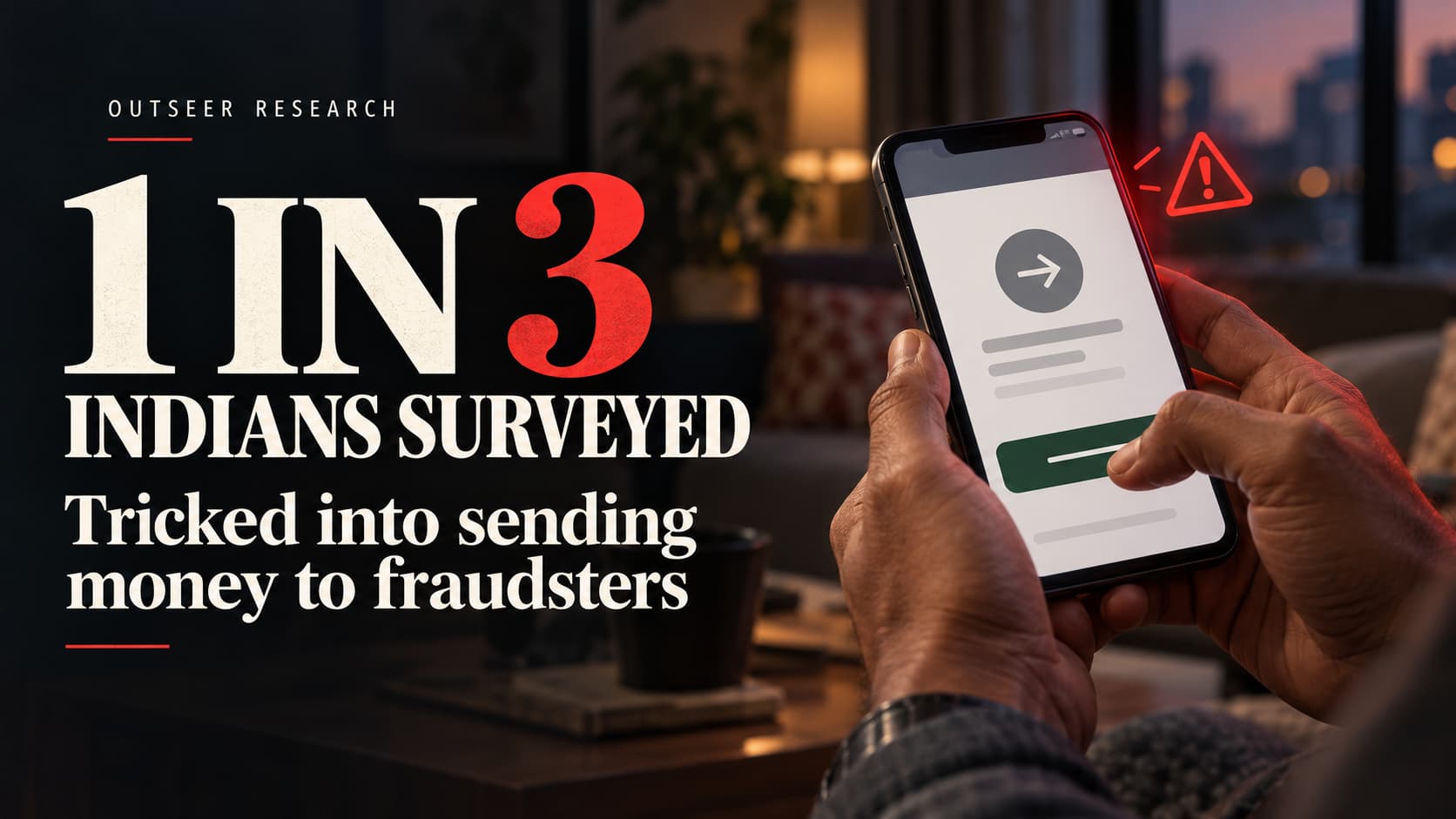
MUMBAI, India | 10 October 2026 — A new consumer study from Outseer, a digital fraud prevention company, highlights the scale of social-engineering scams in India. According to the company’s research, 34.4% of surveyed Indian consumers said they had personally been tricked by a fraudster into sending money from their own bank account.
The figure rose to 59.8% when respondents who had seen the same happen to someone close to them were included. Outseer said India’s personal-experience figure was the highest among the seven markets surveyed, compared with a 20.9% average across those markets.
Social engineering is changing the fraud challenge
The research points to scams in which criminals manipulate genuine customers into authorising payments themselves, rather than relying only on stolen credentials or compromised accounts. Outseer reported that 30.8% of Indian respondents had personally been targeted by someone posing as police, government or another authority and threatening action unless money was sent. A further 34.0% said they had been asked to install an app that could allow a fraudster to control their device.
Trust in banks is also at stake
Among respondents who said they had been tricked into sending money, 64.6% reported that the experience reduced their trust in the provider involved. The findings underline the potential reputational impact of scams as well as the financial harm to customers.
The study also found that 83.5% of Indian respondents reacted positively to their bank using background technology to check that the person making a payment was genuinely the customer. This suggests that consumers may welcome protective measures that work without automatically adding friction to every transaction.
Implications for India’s BFSI sector
For banks, fintechs and payment providers, the findings reinforce the need to complement authentication with transaction-level risk assessment. Behavioural biometrics, device intelligence, transaction signals and contextual risk analysis can provide additional clues when a legitimate customer may be acting under pressure or manipulation.
Financial institutions should assess these controls against their own risk profiles, customer journeys, privacy obligations and applicable regulatory requirements. No single technology can eliminate scams; effective prevention also depends on customer education, rapid response and coordination across the payments ecosystem.
About the research
The findings are drawn from an Outseer study of 7,029 consumers across India, the United Kingdom, the United States, Sweden, Australia, Brazil and Singapore, including 1,002 respondents in India. The survey examined consumer experiences and concerns across multiple fraud and scam types, as well as attitudes towards authentication and liability.
About BFSI NXT
BFSI NXT is an ecosystem focused on connecting leaders and solution providers across banking, financial services and insurance, with an emphasis on innovation, enterprise value, trust and security.
Related reading
- From Fraud Alerts to Financial Crime Intelligence: A New Playbook for Lenders
- India’s Digital Payments Need the Next Layer: Reliability, Intelligence and Recovery