

Table of Contents
India’s credit ecosystem is undergoing a fundamental transformation. Over the past decade, the financial services industry has made remarkable progress in expanding formal credit access through digitization, stronger data infrastructure and innovative lending models. Today, we are entering the next phase of this evolution, where credit intelligence, powered by data, analytics and artificial intelligence, is reshaping how risk is assessed, decisions are made and underserved segments are brought into the formal financial system.
Beyond loan eligibility
Traditionally, lending decisions have relied on borrowers’ historical credit behaviour and available financial records. While these remain important indicators of creditworthiness, the evolving lending landscape calls for a more comprehensive approach to credit assessment. Credit intelligence is increasingly moving beyond determining loan eligibility to understanding borrower profiles, assessing potential risks and identifying opportunities for responsible lending.
Across India’s credit ecosystem, lenders today have access to significantly richer information than they did a decade ago. Credit bureau data, business insights, consent-based financial data and digital transaction trails are collectively creating a more comprehensive view of borrower behaviour, enabling stronger risk assessment and more informed lending decisions.
Separating insight from noise
What is particularly interesting is that lenders are no longer struggling with a lack of information. The real challenge today is not collecting more data, but identifying which signals truly matter. In an environment where institutions have access to vast amounts of customer, transactional and behavioural information, competitive advantage will increasingly come from the ability to distinguish insight from noise. The lenders that succeed will not necessarily be those with the most data, but those with the most effective intelligence frameworks. The scale of the opportunity is evident in India’s MSME sector alone, where CRIF’s MSMEx Spotlight Report highlights nearly 194 lakh active MSME loan accounts in the formal system.
Artificial intelligence is accelerating this shift. As lending portfolios become larger and more complex, AI-powered models are helping institutions move from reactive to predictive risk management by identifying emerging stress patterns and providing earlier warning signals of credit deterioration.
Responsible AI and data governance
The growing use of technology in lending must be accompanied by transparency, accountability and responsible data practices. Credit assessment models need to be explainable, regularly evaluated for potential biases and supported by strong data governance frameworks. The objective should not simply be to accelerate lending decisions, but to ensure that these decisions are fair, consistent and based on reliable information. Maintaining borrower consent, protecting data privacy and ensuring compliance with regulatory requirements will remain critical to building trust in a technology-led credit ecosystem.
The role of alternative data
Another significant development is the growing role of alternative and supplementary data in credit assessment. Small businesses, self-employed individuals and first-time borrowers have often faced challenges due to limited credit histories. Today, indicators such as GST filing behaviour, transaction patterns, cash-flow analytics, digital payment activity and consent-based financial data can provide a more comprehensive view of financial health. When combined with traditional credit information, these insights enable lenders to assess risk more accurately, support greater financial inclusion and extend responsible credit to previously underserved segments.
The opportunity is particularly significant in the MSME sector, where CRIF’s research indicates that micro enterprises account for more than 84% of active loan accounts. Developing richer methods of assessing financial health can help lenders serve these businesses more effectively while maintaining prudent risk management standards.
From data to actionable intelligence
Looking ahead, the next phase of lending will be defined by how effectively financial institutions translate data into actionable intelligence. This will require stronger data ecosystems, continuous innovation in analytical capabilities and a balanced approach that combines technology, regulatory oversight and human judgement. As data volumes continue to expand, competitive advantage will increasingly belong to institutions that can combine robust data assets, advanced analytics and responsible AI to make faster, more accurate and more transparent credit decisions.
India is uniquely positioned for this transition. Its digital public infrastructure, spanning digital identity systems and real-time payments to consent-based data sharing frameworks provides a strong foundation for a more intelligent and inclusive credit ecosystem. The opportunity now lies in converting these digital rails into better lending outcomes.
Ultimately, the success of this transformation will be measured not by the amount of data that institutions collect, nor by the speed at which decisions are made, but by the quality of the outcomes those decisions create. The true promise of credit intelligence lies in enabling lenders to manage risk more effectively, extend credit more responsibly and bring more individuals and businesses into the formal economy. In that sense, the future of lending is not simply digital. It is intelligent.
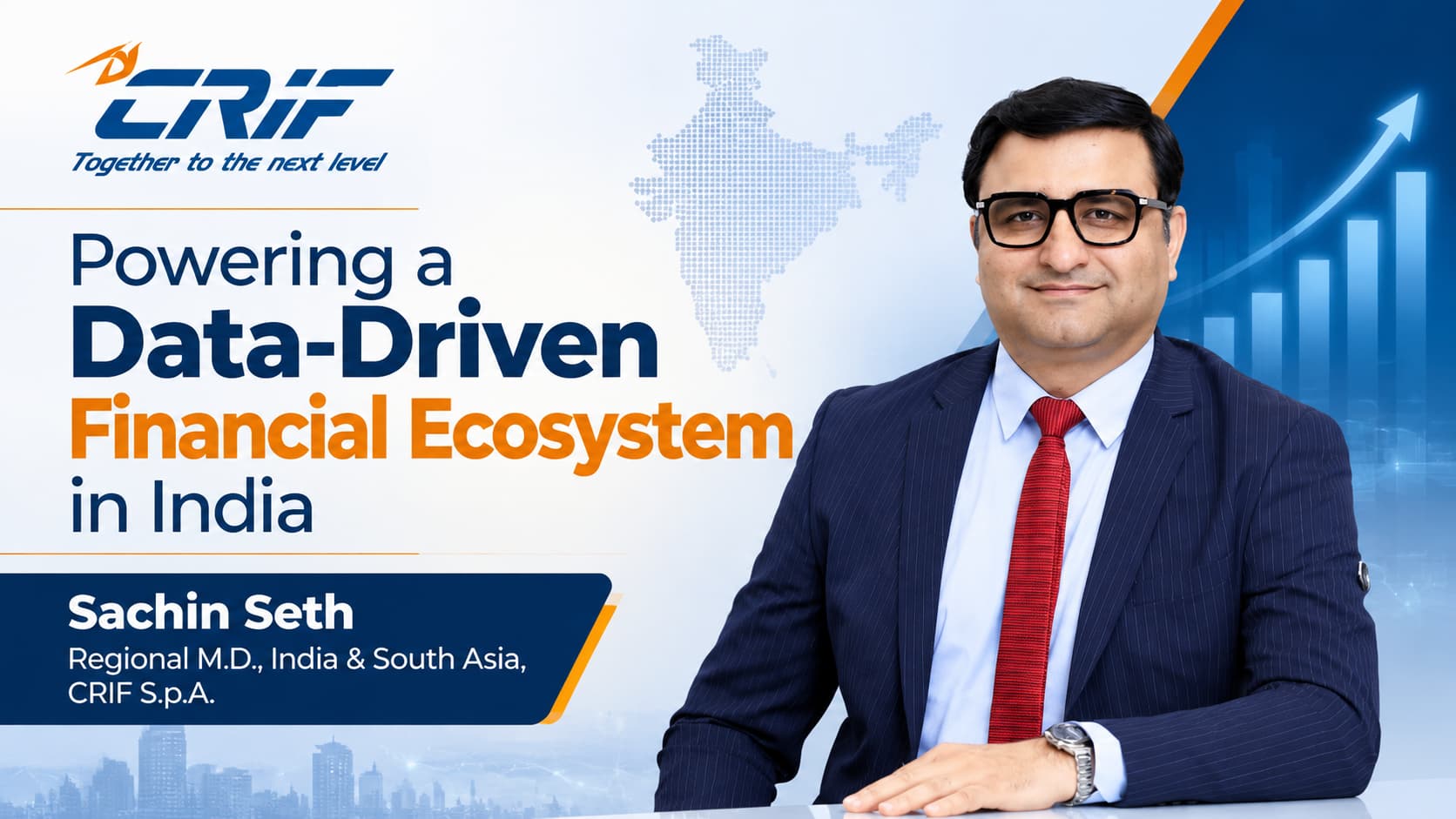
Sachin Seth is Regional Managing Director, India & South Asia, CRIF S.p.A. The views expressed are personal.