

Table of Contents
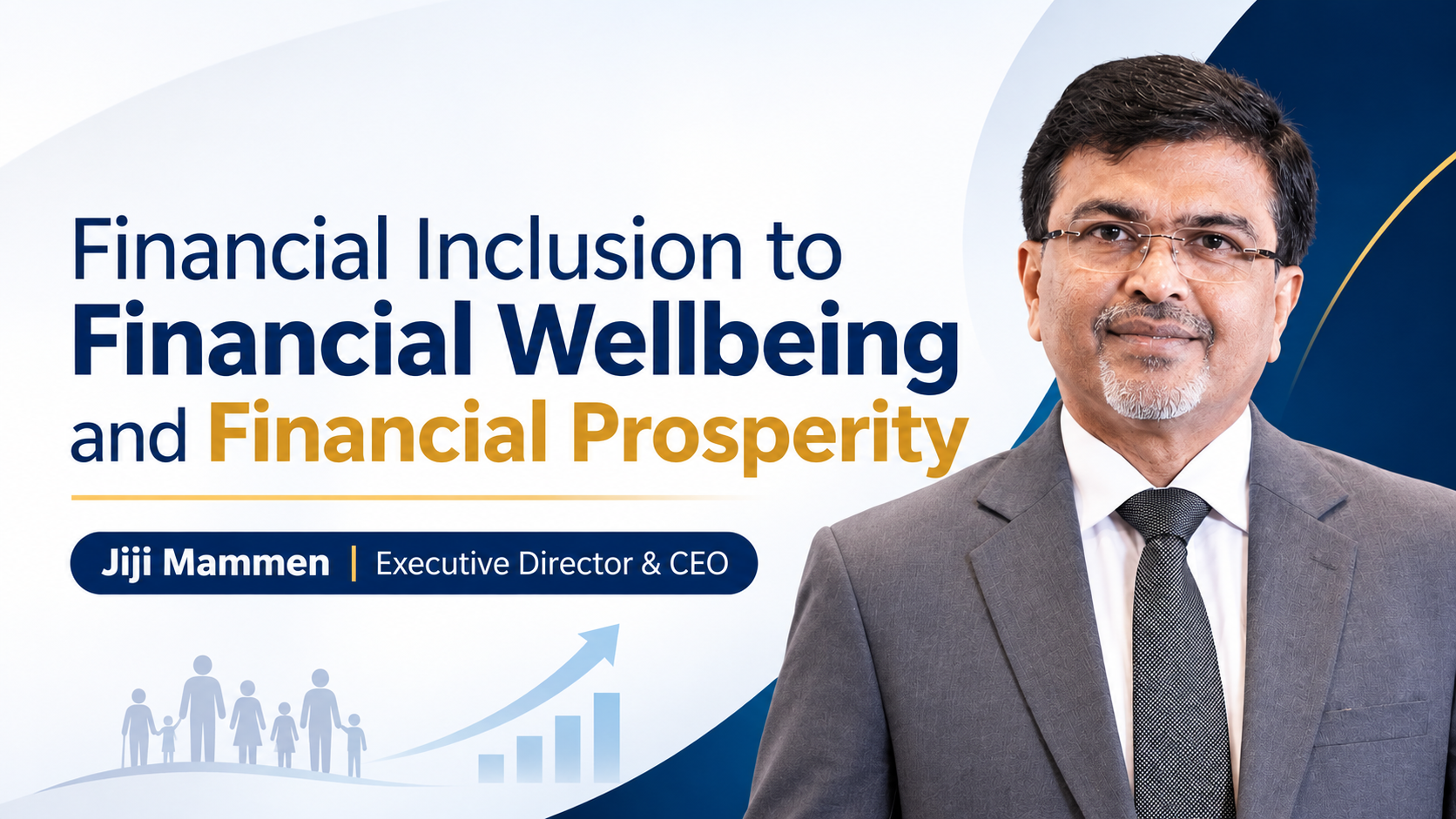
Financial inclusion is a success story in India. More than 90% of the adult population, both men and women, are now included through bank accounts. But opening an account was only the first step. The next phase must take households from being financially included to being financially well, and ultimately, financially prosperous.
How India got here
Although financial inclusion as a concept was started by RBI in 2005, the real push came in 2014, when the present Government decided to go for financial inclusion in an all-out manner. Thus came the Pradhan Mantri Jan Dhan Yojana (PMJDY). It was followed by two insurance schemes, PMJJBY and PMSBY, ensuring life cover and general insurance for the poorer sections, and a pension programme, the Atal Pension Yojana, making all these financial products available at a very economic cost.
These were complemented by programmes like the Pradhan Mantri Mudra Yojana (PMMY), Stand-Up India, and a digital payment system built on the Aadhaar framework. But the real winner was PMJDY.
The story in numbers
- 59 crore+ bank accounts opened under PMJDY, mobilising Rs 3.16 lakh crore in savings deposits
- 56% of Jan Dhan account holders are women who never had an account earlier
- ~28 crore subscribers under PMJJBY, and more than double that under PMSBY
- Below 10 crore subscribers under the Atal Pension Yojana
- 57 crore+ loan accounts and Rs 40 lakh crore+ disbursed under PMMY
- RBI’s Financial Inclusion Index up from 43% in 2017 to 67% today
These schemes have made the life of the ordinary citizen much better and have strengthened India’s financial inclusion story.
Credit to the last mile
PMMY and Stand-Up India were launched to provide access to credit, and PMMY became a runaway hit. Microfinance institutions played a major role in lending under the Shishu category: about 74% of the borrowers funded are Shishu borrowers, accounting for nearly one-third of the total amount disbursed. The MFIs ensured that the money reached the last mile.
The gaps that remain
India can be proud of having achieved the tenets of financial inclusion. But challenges remain:
- Lack of proper utilisation of bank accounts, with many Jan Dhan accounts dormant or used only to receive DBT payments
- Non-renewal of insurance policies
- Breaks in continuity in pension contributions
Even so, it is a better position than ever before. The question now is whether it is sufficient, and how to take people to the next level.
Financial inclusion is the beginning, not the end. The mission is complete only when households achieve financial wellbeing and, beyond it, financial prosperity.
Jiji Mammen, ED & CEO, Sa-Dhan
Wellbeing vs. prosperity: two stages of financial health
Financial wellbeing is about stability, security and peace of mind. It is a state where one can fully meet current and ongoing financial obligations, feel secure about the future, and make choices that allow one to enjoy life.
Financial prosperity goes a step further. It is about abundance, wealth accumulation and financial freedom, where resources are enough to significantly expand lifestyle choices, build generational wealth, and make major life pivots without financial constraints.
The way forward
1. Financial and digital literacy. There must be regular programmes for financial education. Financial literacy can be part of the school curriculum, so that a culture of financial awareness is created from an early stage, and can empower adults in prudent financial management. Digital literacy is equally important, as digital ignorance can lead to several difficulties, including exposure to digital frauds.
2. Income enhancement. Skilling and entrepreneurial management are needed to raise incomes. Skilling must be integrated with handholding support so people can venture into income-generating activities and small enterprises. Combined with family budgeting, proper fund management, and saving and investing surpluses, this builds financial wellbeing, supported by social security schemes.
Financial prosperity is the step beyond, and generating sufficient income is the route to it. The initial success of financial inclusion is laudable, but we should not stop there. Enhancing the financial health of the people is the way forward for financial inclusion.
Jiji Mammen is the Executive Director & CEO of Sa-Dhan, a Self-Regulatory Organisation (SRO) for microfinance institutions. The views expressed are personal.